

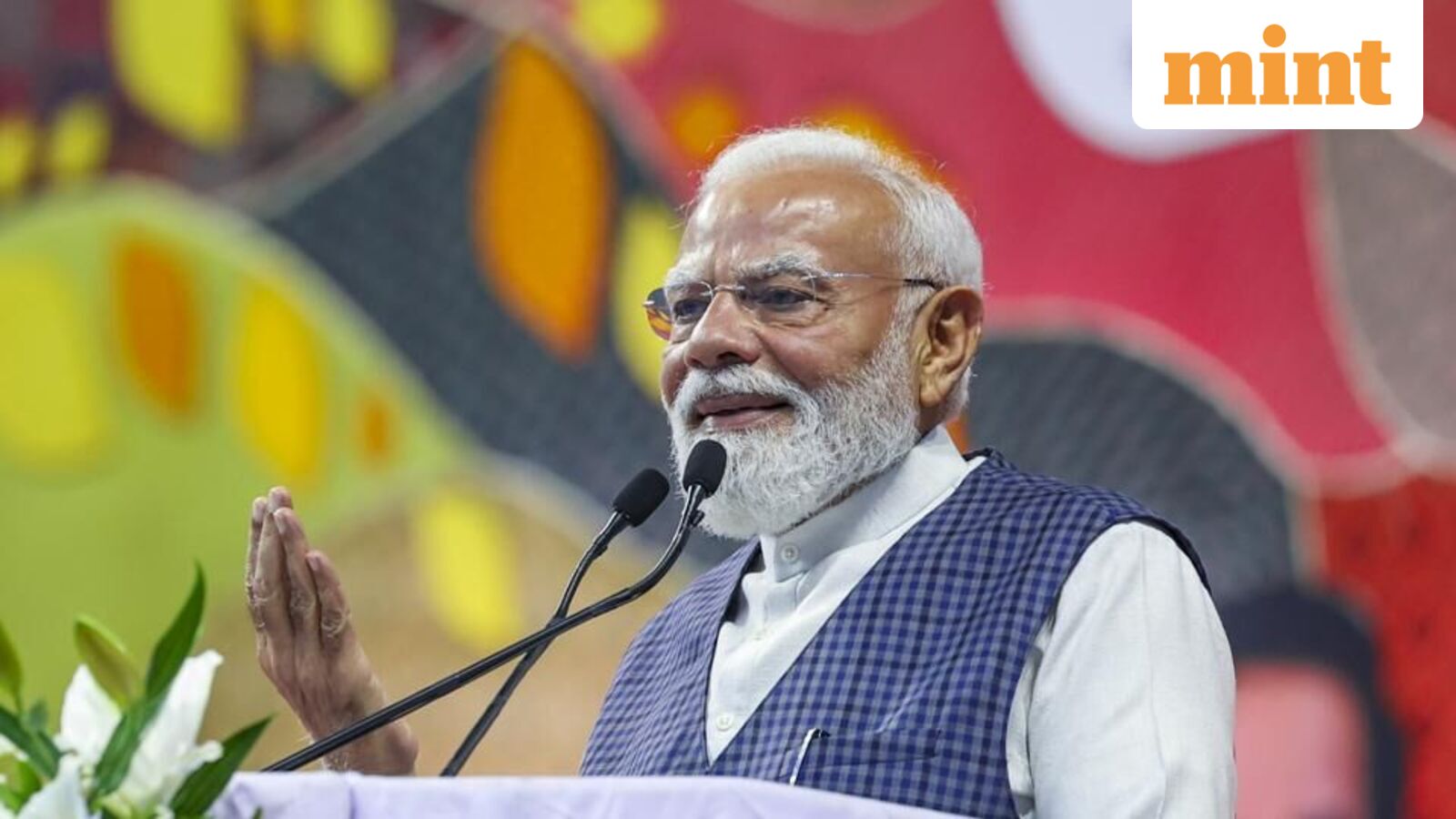
Narendra Modi has today, on 10 June, achieved a historic milestone by becoming India’s longest-continuously serving elected Prime Minister. He has completed 4,399 consecutive days in office, surpassing the 4,398 days record held by former PM Jawaharlal Nehru.
Celebrating the milestone, PM Modi is set to chair a conclave of Chief Ministers, Deputy Chief Ministers and senior leadership from NDA-ruled states and Union Territories (UTs) at Bharat Mandapam in New Delhi.
Notably, this also marks 12 years since the formation of the National Democratic Alliance government. Amid this, we take a look at some of the changes the Modi-led NDA government has launched for taxpayers over the past 12 years.
Here’s what has changed for taxpayers?
Under PM Modi, India’s taxation laws and the tax system have been reworked to push a digital first and more simplified strategy. Some of the key changes include revision of GST rates, updates to the income-tax law and rules, and various income-tax return (ITR) filing related rules.
New income-tax rules
The Finance Ministry earlier this year notified its new Income-Tax Rules, 2026. The updates include reduction in the number of tax rules from 399 to 190, and the number of tax forms has been reduced from 511 to 333. Further, all the forms will look the same and feature text that is easier to read, with features like auto-filled data.
The changes aim to make the taxation system easier for businesses and taxpayers to use.
New tax regime
Finance Minister Nirmala Sitharaman in her Union Budget speeches over the years announced the new tax regime, which introduced different tax slabs and exemption rules to offer a higher ceiling on taxable income for salaried individuals by up to ₹12 lakh annually. The new tax regime slabs are as follows:
- Zero tax for income up to ₹2.5 lakh
- 5% for income between ₹2.5 lakh and up to ₹5 lakh
- 10% for income between ₹5 lakh and up to ₹7.5 lakh
- 15% for income between ₹7.5 lakh and up to ₹10 lakh
- 20% for income between ₹10 lakh up to ₹12.5 lakh
- 25% for income between ₹12.5 lakh and up to ₹15 lakh
- 30% for income above ₹15 lakh.
GST rationalisation
Sitharaman last year announced revision of the Goods and Services Tax (GST) rates in India to simplify business compliance and reduce cascading tax burdens.
The GST Council revised slabs from four (5%, 12%, 18%, and 28%) to two (5% and 18%), plus a special rate of 40% on select items and sin goods. As a result, as many as 375 items, including automobiles, electronics, equipment, kitchen staples and medicines, got cheaper.
Corporate perks
- Meal cards: No taxes for corporate meal cards that cost ₹200 or less per meal, under the Old Tax regime only. This includes free food and non-alcoholic beverages for employees, and is an increase from the previous ₹50 per meal
- Coupons and gift cards: Corporate gift cards, gift certificates or coupons of up to ₹15,000 each year are tax-free under the Old Tax regime.
- Corporate loans: Loans with no interest or interest rates below the market rate are to be taxed, based on the difference between the State Bank of India (SBI) lending rate and the actual rate charged, subject to certain exceptions. However, loans less than ₹2 lakh and those taken for medical emergencies remain tax-free.
- Corporate / company vehicle: For vehicles assigned by employer for work and personal use, tax of ₹8,000/month will be applicable on cars with engines up to 1.6 litre; and ₹10,000/month for bigger vehicles. This is under the Old and New Tax regimes.
HRA exemption and other allowances
- HRA: Four new cities added to list of metros allowed to claim 50% House and Rental Allowance (HRA) exemption. Ahmedabad, Bengaluru, Hyderabad and Pune have been added to the list which includes Chennai, Delhi, Kolkata and Mumbai. This is under the Old Tax regime.
- Children’s education-related expenses: The exemption for the children’s education allowance has increased from ₹100/month to ₹3,000/month, per child under Old Tax regime. Further, the hostel expenditure allowance under Old Tax regime has also been increased from ₹300/month to ₹9,000/month, per child.
- Sector allowance: The exemption for the allowance granted to employees working in any transport system has been enhanced from ₹10,000/month or 70% of the allowance, whichever is lower, to ₹25,000/month or 70% of the allowance, whichever is lower.
Securities Transaction Tax hike
The Centre has hiked Securities Transaction Tax (STT) for the equity derivatives segment in a move that is expected to hit futures and options (F&O) traders. STT on futures will be increased to 0.05% from 0.02%, and on options transactions will be raised to 0.15% from 0.1%, from 1 April. This tax is levied on every purchase and sale of securities, such as equity shares, futures and options on recognised stock exchanges.
Buyback taxation
Any amount received from the buyback of shares will be taxed as capital gains from 1 April. Further, promoter shareholders will have to pay a “differential buyback tax” with an effective rate of 22% for corporate promoters and 30% for non-corporate promoters.
Changes to TCS
The Budget rationalised Tax Collected at Source (TCS) to ease compliance, reduce refund delays, and address confusion among taxpayers, with effect from April. TCS rates on alcoholic drinks is increased from 1% to 2%; TCS rates on remittance under Liberalised Remittance Scheme (LRS) for overseas tour package have been reduced to a single flat rate of 2% without threshold from the existing dual rate of 5% and 20%; TCS rate for remittance under LRS for education and medical treatment has been reduced from 5% to 2%.
Disclaimer: This article is for educational purposes only. The views and recommendations expressed are of individual analysts or broking firms, not Mint. We advise investors to consult with certified experts before making any investment decisions, as market conditions can change rapidly and circumstances may vary.